External Surface Vulnerabilities
4 Active Findings| Severity | Finding | Asset | Status | Action |
|---|
Engineered around the autonomous NetWatch Neural Cube. Real-time telemetry across 1,284 enterprise nodes, 3-minute 59-second autonomous breach containment, and continuous SOC2, HIPAA & GDPR readiness.
Continuous threat discovery, asset telemetry, and automated AI remediation across multi-tenant environments.
| Severity | Finding | Asset | Status | Action |
|---|

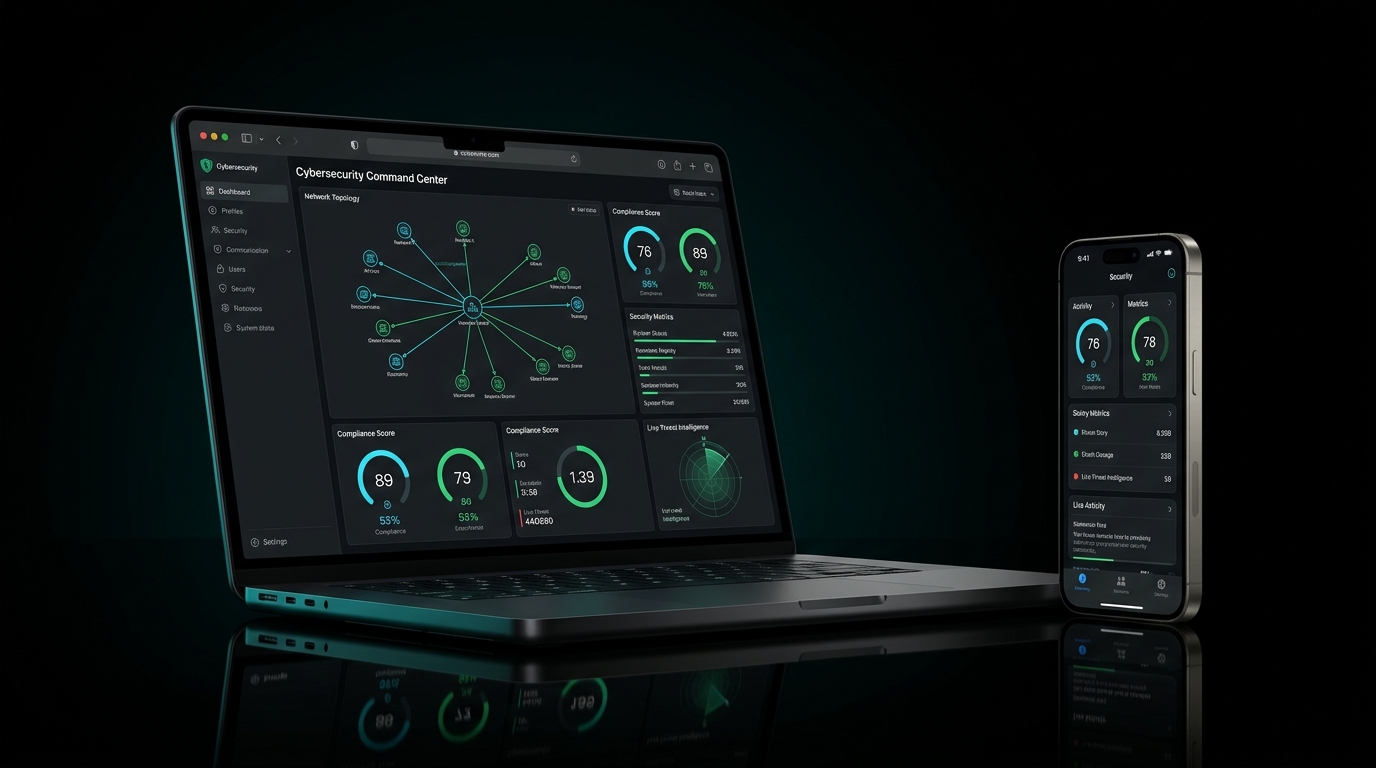
Investigate CVE distributions in the SOC on MacBook Pro or approve a hardware MFA lockout from your iPhone.
Hover over any Bento module to interact with its 3D isometric security cube.
Full visibility from External Gateway through core-switch-01 to every production cluster.
Interactive hardware-accelerated security cube. Touch, drag or rotate to inspect active planes.
The newest vulnerabilities being used in real attacks, new critical CVEs, and recent cyberattacks around the world. Updated every 30 minutes.
Sources: the CISA Known Exploited Vulnerabilities catalog, the NIST National Vulnerability Database, and headlines from The Hacker News, BleepingComputer, SecurityWeek and The Record. Headlines link to the publisher's article.
Check your business for free →Plain answers about what Wardvane Cyber does, what a scan touches, and what it costs.
Still have a question? Call Smart Tech Miami at 786-796-3930.
Wardvane Cyber checks the parts of a business that face the internet (its website, its domain and its public IP addresses) for security weaknesses. It then explains what it found in plain language, how serious each issue is and how to fix it, and keeps track as you fix things.
Small businesses that want to know where they stand without hiring a security team, and the IT providers (MSPs) who look after them. An IT provider manages each customer in its own space and can share reports under its own brand.
Our scanner looks at your public addresses from the internet, the way an outsider would: which services answer, how your website is set up, and whether it has known weaknesses. It never signs in to your systems. A Quick scan is light and doesn't try to break anything; a Full scan sends more requests, so it is best run outside business hours.
ZAP is the website check, and it's the default. It visits your website the way a visitor's browser does and looks for weak security settings and exposed information, such as missing security headers or exposed files.
Nuclei is the known-weakness check. It tests your public addresses against thousands of published vulnerabilities (CVEs), exposed admin pages and misconfigured services. It is a good fit for servers, firewalls, VPNs and email systems.
You choose for each scan. The two find different things, so using both over time gives the fullest picture.
No. Before the first scan you prove you control the domain by adding a DNS record, confirm you're allowed to scan it, and verify your phone number. Scans of anything else are refused.
No. Website and internet-facing scans run from our scanner, so there is nothing to install. A small agent for scanning inside your office network is coming soon, for businesses that want to see their internal devices too.
The Free plan covers one domain with one Quick scan a month. Paid plans start at $79 a month for five domains, billed yearly, with larger plans for 25 and 100 domains. Internal network plans are priced by the number of devices.
A CVE is a public ID for one known security flaw in a product, like CVE-2024-3400. "Exploited now" means the U.S. Cybersecurity and Infrastructure Security Agency (CISA) has confirmed attackers are using that flaw in real attacks. If you run an affected product, fix those first.
Results stay in your account, so you can compare each scan with the one before and see what's new and what's fixed. Only your team can see them, plus Wardvane Cyber support staff when they need to help with your account. When you remove a business, its scan data is removed too.